

Buying a new car in India feels like a festival, na? New car smell, seat covers, photos, ladoos… the full vibe. But here’s the kicker: if you skip PDI, your dream car can turn into a headache before the first tank of fuel.
I’ve seen this too many times. A friend skipped PDI (Pre-Delivery Inspection), got a car with a repaint on the rear door and tyre DOT from the previous year. Later, his steering pulled left, and the dealership kept saying “Sir, it’s normal.” By the time he realised, registration was done. No swap. Full rona-dhona.
Don’t worry, yaar. In my 15 years covering the Indian car scene, I’ve done PDIs in stockyards, cramped basements, and swanky showrooms. I’ve caught flood-damaged units, swapped alloys, and odo tampering. Once you know what to check, the power shifts to you.
This guide will break down PDI like we’re chatting over chai. Simple words, zero corporate drama, all dealership hacks. I’ll show you when to do it, how to do it, exactly what to check, and how to avoid getting scammed.
Bookmark this. Share it with your cousin who’s buying a new ride. And when you do your PDI, send me a virtual high-five, because you’re about to save yourself a ton of stress.
Ready? Let’s go, bhai.
- What is PDI in Cars: Simple Definition and Why It Matters
- When to Do PDI: Timeline, VIN, and RTO Basics
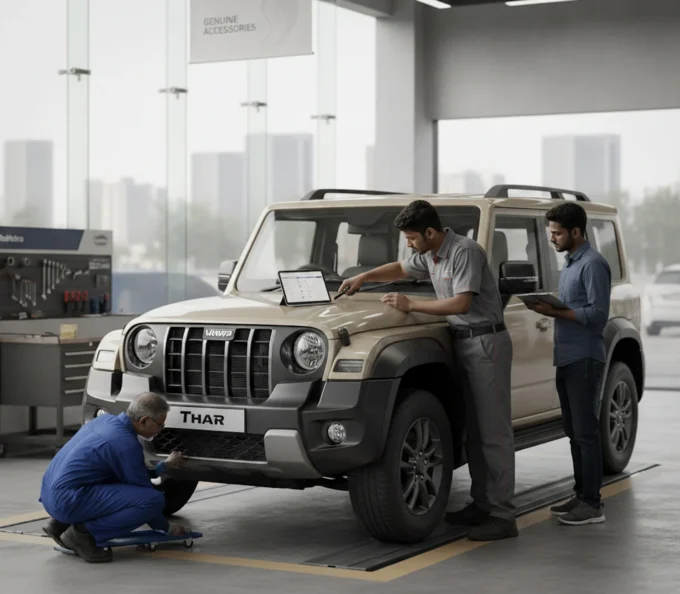
- How I Do PDI at the Dealership: Step-by-Step
- The Ultimate Car PDI Checklist (India-Ready)
- Dealer Tricks and How Not to Get Scammed During PDI
- Common PDI Red Flags: When to Walk Away
- Paperwork Hacks: What to Finalize Before Delivery Day
- FAQ: People Also Ask
- Who Should Be Strict About PDI (And Who Can Chill)?
What is PDI in Cars: Simple Definition and Why It Matters
PDI stands for Pre-Delivery Inspection. It’s a full check of your exact car (by VIN) before you accept delivery or registration. Think of it as your final exam for the dealership: the car must pass, or it goes back.
Why it matters? Because cars are moved, parked, and handled by multiple people before reaching you. Stuff happens. Minor scrapes, battery drain, panel repaints, missing tools, software bugs—these are common. PDI catches them early.
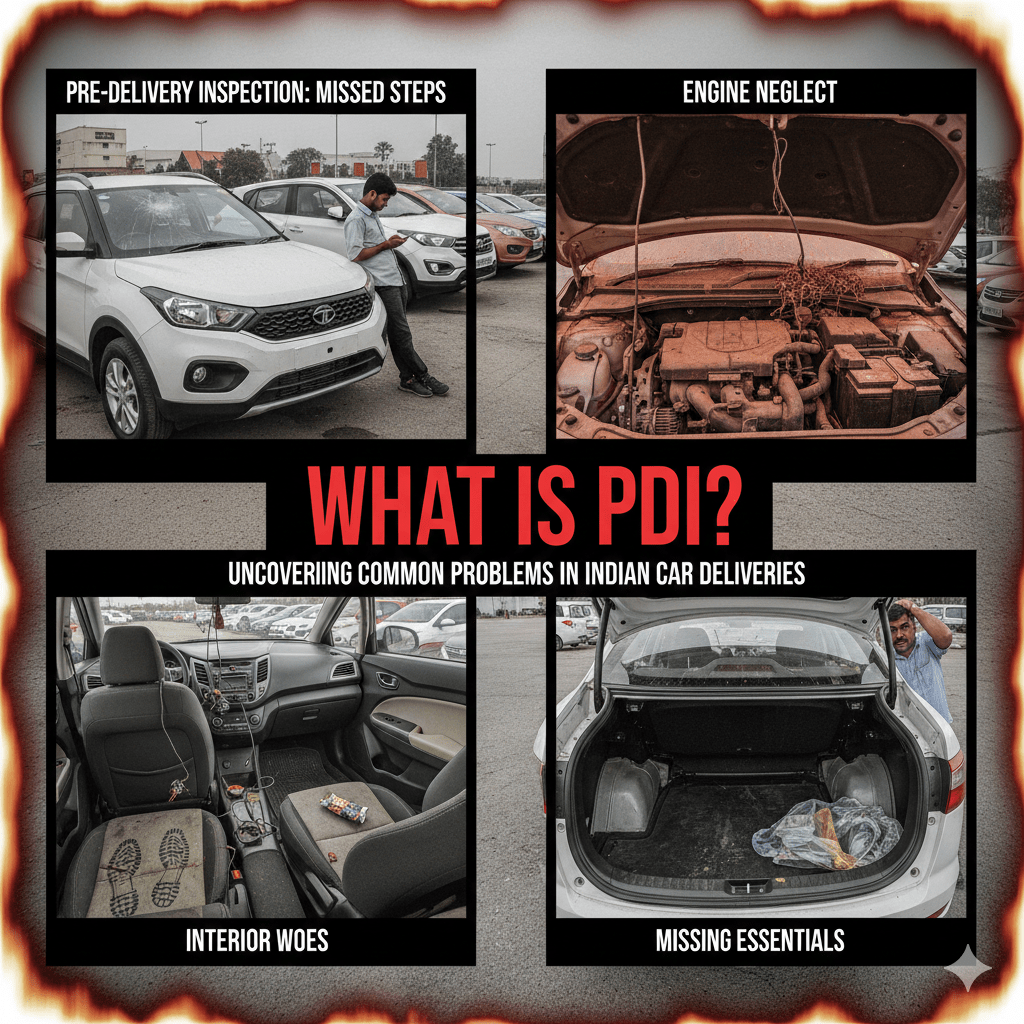
In my experience, most issues are small but expensive later. A weak 12V battery, a bent alloy, or misaligned panel can spiral into service-center drama. PDI is your shield against that.
Also, PDI helps you avoid old stock. You can verify manufacturing month/year, tyre DOT, VIN, and odometer. If it’s older than you were promised, you can push back.
Bottom line: PDI = peace of mind + paisa vasool. Do it properly, or don’t sign anything.
When to Do PDI: Timeline, VIN, and RTO Basics
Ideal timing? Before billing and before registration. Once the car is registered in your name, getting a replacement gets tough. So insist on PDI after allocation, before payment completion.
Step one: Ask the dealer to “block” a specific VIN for you. Get the VIN on email/WhatsApp. Cross-check VIN on the chassis, windshield plate, and pillar sticker during PDI.
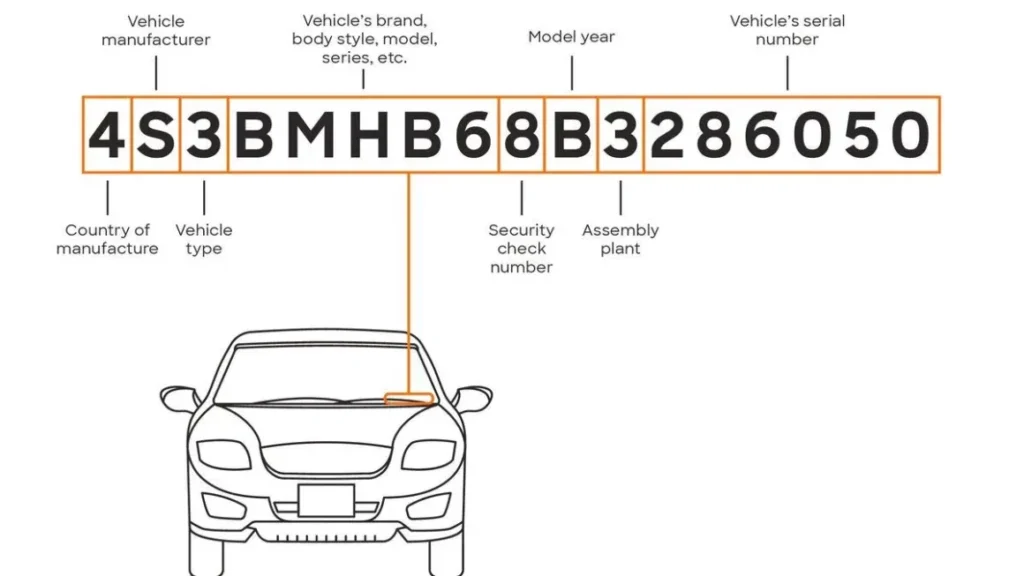
Manufacturing month/year matters. For most brands, you can decode the VIN to see when the car was built. Also check the tyre’s DOT code (_week and year_). If the car is brand new but tyres are from last year, ask why.
Do PDI in daylight. Avoid rainy evenings or basement lighting. If they push stockyard PDI—great. More natural light, less showroom polish to hide imperfections.
Important: If the dealer says “We’ll register and then you do PDI,” politely say no. Registration should happen after your PDI sign-off. Simple.
How I Do PDI at the Dealership: Step-by-Step
Here’s my flow that has saved me and my readers countless times.
First, I walk around the car slowly. No rush. I check for paint shade mismatch, uneven panel gaps, scratches near door edges, and overspray inside door frames. If something feels off, I run my fingers gently along the edges.
Then I squat and check the underbody, exhaust, and suspension area for fresh scrapes or rust spots. New cars shouldn’t have underbody damage. If there is, walk away.
After that, I jump inside. I sniff—yes, the smell tells you a lot. Damp or musty smell can mean water ingress. I check the headliner, carpets, boot floor, and tool kit area for moisture.
Next, ignition ON (don’t start yet): All warning lights should light up and go off—ABS, airbag, ESC, TPMS. If any stays on, note it and ask for a fix before delivery.
Finally, a very short low-speed loop (if allowed in stockyard/private road). I listen for rattles, steering alignment, and brake bite. If test drive isn’t possible, at least roll a few meters forward/backward in neutral to feel roughness or grinding.
You can also try our online tool for your car pdi, where you can download full report of your dream car.
The Ultimate Car PDI Checklist (India-Ready)
Save this list. I’ve refined it over dozens of PDIs across brands—Maruti, Hyundai, Tata, Mahindra, Kia, Toyota, Skoda, VW, Honda—you name it.
Tip:
Carry a small torch, microfiber cloth, tyre pressure gauge, and your phone with Notes/Camera. If you own an OBD scanner, carry it. Not mandatory, but beast-level pro-tip.
Exterior and Tyres:
- VIN on body matches allocation; no re-stamping or flaky stickers.
- Paint uniformity in sunlight; check for overspray, orange peel, touch-ups near edges.
- Panel gaps even on bonnet, boot, and doors; doors open/close smoothly.
- Alloys/steel rims free of curb rash; wheel nuts present and tight.
- Tyre DOT week/year recent; all four + spare same brand/size; tread nubs intact.
- No windshield chips; all glasses’ logos match (no random replacement).
- Headlamps/fog lamps clear, not hazy; all bulbs/LEDs work including indicators and DRLs.
Interior & Electronics:
- Odometer ideally under 50–100 km; trip meters reset; no “Service due” message.
- All warning lights come on and go off on ignition cycle.
- Infotainment boots without lag; Android Auto/Apple CarPlay connects; speakers clear.
- Reverse camera clarity; park sensors beep; steering controls work.
- Power windows, ORVM fold/adjust, central locking, horn, wipers/washer fluid OK.
- AC chills fast; climate controls respond; rear AC vents blow evenly.
- Seats/seatbelts clean and locking properly; ISOFIX covers present (if equipped).
Mechanical & Underbody:
- Cold start: engine idles steady; no metallic knocks or smoke.
- Steering straight; no pull; suspension silent over small bumps.
- Brake pedal firm; no grinding sounds; handbrake holds on incline.
- Fluids: engine oil level, coolant expansion tank, brake fluid—no leaks.
- Exhaust hangers intact; underbody free from fresh scrapes or rust patches.
Documents & Kits:
- Owner’s manual, service book, warranty booklet, RSA card.
- Form 22 (road-worthiness), invoice draft (before final), insurance draft—verify VIN/engine numbers.
- Tool kit, jack, tow hook, spare wheel, triangle, first-aid kit, fasteners for number plates.
- Two keys working; remote functions OK; immobiliser light behaviour normal.
- Battery brand and date sticker recent; battery terminals tight, no corrosion.
Software & Updates:
- Check for ECU/infotainment updates; ask dealer to apply latest stable firmware.
- Verify TPMS calibration; reset if showing wrong pressures.
- If ADAS present: test lane warning, AEB warning (static tests), and camera visibility.
If anything fails, write it down and ask for a replacement unit or repair before billing. Don’t feel shy. Your money, your rules.
Dealer Tricks and How Not to Get Scammed During PDI
Trick 1: “Sir, delivery is tomorrow, do PDI after registration.” No. Your leverage dies post-registration. Do PDI now, or choose another dealer.
Trick 2: Handling charges. Many cities have cracked down on illegal “handling/logistics” fees. Pay ex-showroom, RTO taxes, insurance, number plate/Hypothecation (if applicable), and accessories you actually want. Nothing extra.
Trick 3: Forced accessories. If they push a bundle, say, “Bill me line-by-line or remove it.” Aftermarket is often better and cheaper. Don’t get bullied.
Trick 4: Old stock disguised as new. Always check VIN month/year and tyre DOT. If they said “2026 model,” don’t accept 2025 manufacturing without a solid discount.
Trick 5: Odo games. A brand-new car usually shows below 50–100 km. If it’s above 150–200 km without a reason (like intercity transfer), ask for another unit.
Common PDI Red Flags: When to Walk Away
Fresh repaint or mismatched shade on any panel. If you can spot it in sunlight, imagine after a few washes. Don’t accept “Sir, factory finish like this only.”
Underbody hits, bent lower arms, or leaking shocks. Brand-new cars don’t come with crash stories.
Water marks in headlamps or inside cabin. Could indicate pressure wash seepage—or worse, flood exposure. Not worth the risk.
Persistent warning lights (ABS, airbag, ESC). These are safety systems. If they’re not okay now, they won’t suddenly fix themselves.
Dealer refuses stockyard PDI or won’t share VIN until billing. Big red flag. Choose another dealer if possible.
Paperwork Hacks: What to Finalize Before Delivery Day
Get the proforma invoice with breakup: ex-showroom, RTO, insurance, FASTag, accessories, extended warranty, RSA. Cross-check every line; remove junk fees.
Insurance: Compare outside quotes. If dealer matches the coverages and price, fine. Ensure IDV, zero-dep (if you want), engine protector, consumables, return-to-invoice (helpful), tyre cover (optional) are listed clearly.
Registration: Ensure your name, address, and VIN are accurate. Ask for a scanned copy of Form 20, insurance with correct VIN, and tax receipt once done.
Warranty and service schedule: Note service intervals (km/time). If there’s an online app, get your car linked to your account before leaving.
Payment: Keep a small final due for delivery day so the dealership stays responsive. Once they have 100% money, speed drops—sad but true.
FAQ: People Also Ask
Who Should Be Strict About PDI (And Who Can Chill)?
If you’re buying a car above 8–10 lakhs, are particular about build quality, or planning to keep it long-term—be ruthless about PDI. Your future self will thank you.
If you’re taking quick delivery for a wedding or urgent travel, at least do a basic PDI for paint, odo, tyres, warning lights, and documents. Don’t skip the essentials.
For tech-heavy cars (ADAS, connected features), plan extra 30 minutes. Software glitches on day one are annoying. Get updates done before you drive out.
And if the dealer gives you attitude? Remember: you’re paying. Walk away if needed. The right car, at the right time, from a respectful dealership—totally worth the wait.
Do your PDI like a boss. Take delivery with a smile. Then call the family for that first drive to India Gate, Marine Drive, Necklace Road—wherever your city flex is. Because that’s the real joy of a new car, yaar.





Love the real-world examples! The story about the steering pulling left is a nightmare. It’s good to know exactly what to look for—things like tire DOT and repainting—before finalizing the deal.