

New car day is emotional, yaar. Family selfies, nariyal, ribbon, the whole vibe. But here is the kicker: before you touch that delivery ribbon, you MUST nail the PDI, Pre-Delivery Inspection. It’s your only real chance to catch issues before money, registration, and headache lock you in.
I’ve seen the horror stories. One guy in Pune skipped PDI, drove out happy, and within a week discovered a repaint on the rear door and a pulling issue. Dealer said “sir, standard manufacturing variation.” Translation: not our problem. He fought for months.
When I took this into my own routine, I stopped trusting “sir, all good.” I go to the stockyard in broad daylight, checklist in hand, and I check every panel, every document, every beep. No drama. Just peace of mind.
So if you’re searching “what to check in PDI of car?”, this is the only guide you need. No corporate fluff. No dealer bias. Just a clean, Indian-style PDI checklist to save your money and your sanity.
Stick with me. I’ll show you exactly what to look for, what to reject, and how to avoid classic dealership tricks. Don’t get scammed.
Let’s do this properly.
- PDI Basics: What it is and why it matters (especially in India)
- When and where to do PDI (Timing is everything)
- The Ultimate PDI Checklist (Step-by-step)
- Money Moves & Dealership Hacks (Don’t get played)
- VIN, Tyre DOT, Battery, Odo: The numbers that save you
- FAQ
- Who should obsess over PDI? (and who shouldn’t)
- Quick PDI Recap (Bookmark-worthy)
PDI Basics: What it is and why it matters (especially in India)
PDI means Pre-Delivery Inspection. It’s a physical and functional check of your exact car before you accept it. Not a demo car. Not a brochure promise. Your VIN, your unit.
Why it matters? Because cars travel by train/road, get offloaded, parked, re-parked, sometimes even swapped between dealers. Minor paint rubs, chips, bent alloys, battery drain, software bugs — it happens. I’ve found them all in real life.
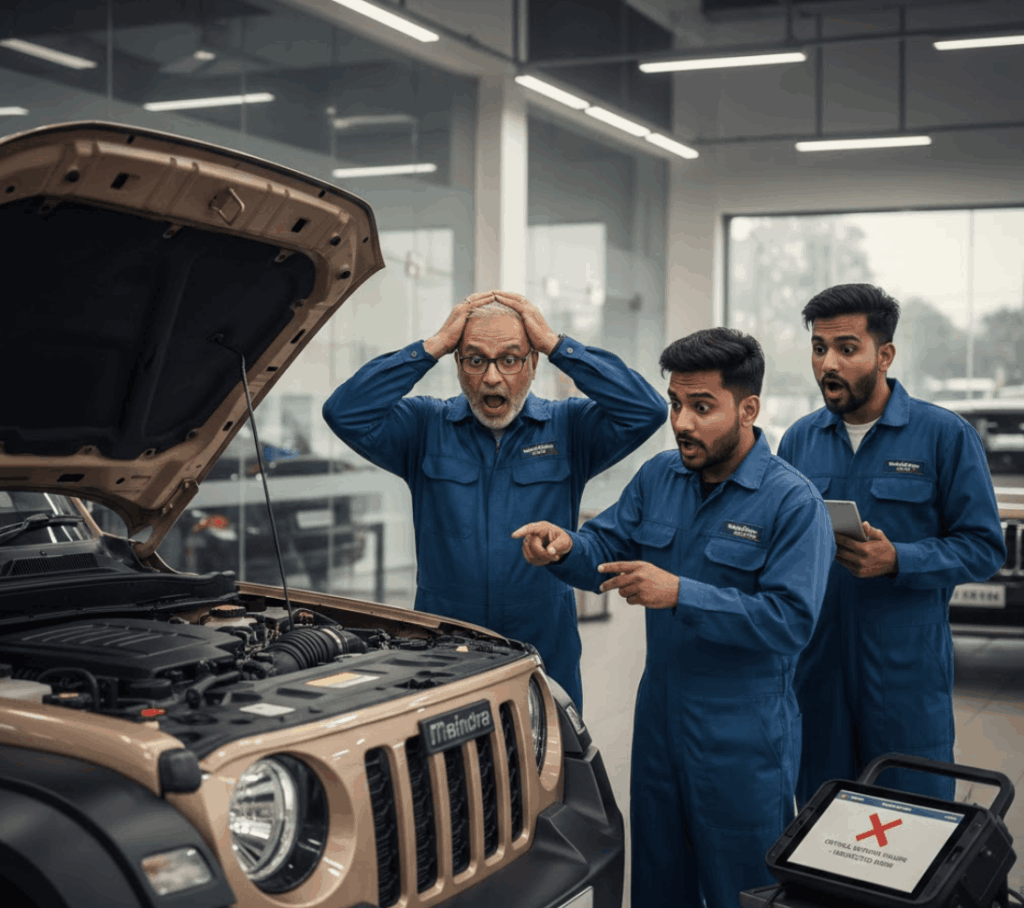
Here’s the catch: after registration, rejecting a car is tough. Everything becomes “warranty, sir.” Warranty doesn’t fix repaint history, odo abuse, or hidden transit damage.
So the rule is simple — PDI before registration and before full payment. If the dealer refuses, that’s a red flag. Walk away or escalate to the OEM.
And yes, do it in proper sunlight. Evening deliveries hide defects. I’ve caught thin clearcoat and pinhole dents only under the sun.
When and where to do PDI (Timing is everything)
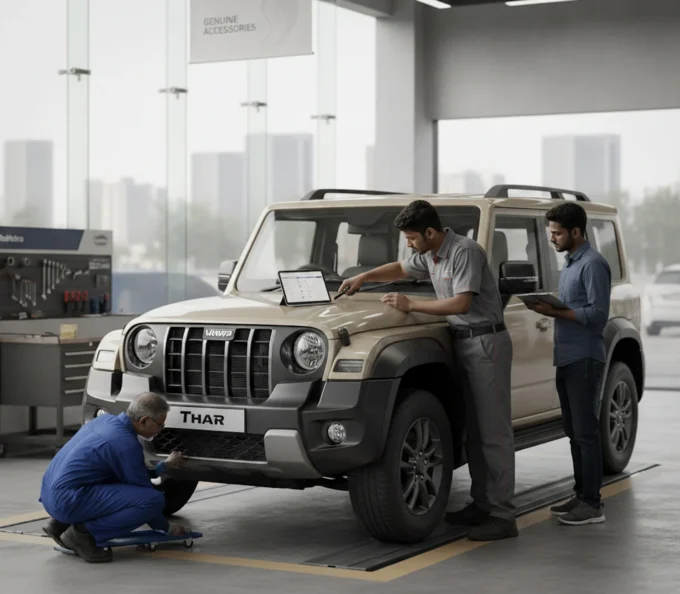
Best place? Stockyard, in daytime. That’s where the car rests raw, without showroom makeup. If they insist on showroom only, make sure the car is unwashed or minimally washed. Dust and water droplets hide scratches.
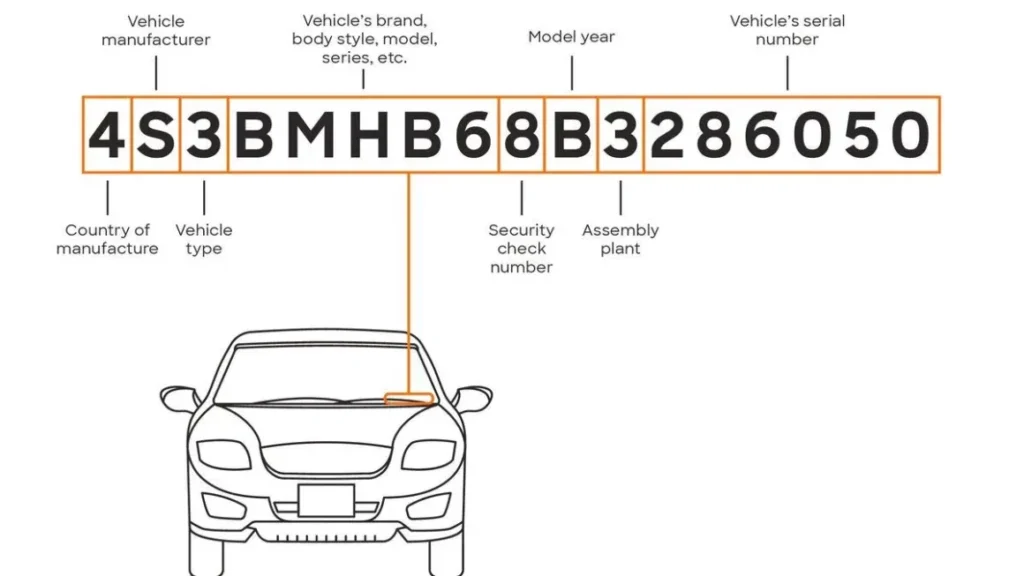
Best time? After allocation, before registration, before full payment. Ask for VIN, decode it, confirm month/year, then book your PDI visit.
You can also read here a full guide on when to do your car pdi?
Pro-tip:
Carry a small torch, a microfiber cloth, and your phone camera. If you have an OBD scanner, even better. Don’t worry — you’re not being fussy; you’re being smart.
And please, avoid festival chaos days for PDI. Staff is rushed, stockyards are messy, and you’ll get less time with the car. Choose a weekday morning.
One more thing: no accessories should be fitted before you approve PDI. I’ve seen dealers hide paint chips under chrome garnish. Not cool.
The Ultimate PDI Checklist (Step-by-step)
We’ll go panel-by-panel, system-by-system. I keep it simple, but thorough. You don’t need to be a mechanic — just observant and stubborn.
Start with VIN and month/year. Then do exterior in sunlight, interior features, engine bay/EV systems, short test drive inside stockyard, and finally documents.
Yes, I include numbers. Odo under 50 km is ideal. Battery above 12.4V for petrol/diesel. Tyre DOT not older than 6 months. Keep these benchmarks in your head.
If something’s off, pause. Ask for another unit or written commitment. Don’t sign delivery forms in a hurry. No FOMO. The right car > the fast car.
Below, I’ve split it out. Follow this order to stay efficient.
Exterior & Bodywork: Where 90% of heartbreak lives
Walk around slowly. Look at reflections from 2–3 angles. If paint looks wavy on one panel compared to others, could be a repaint or poor polish. Don’t ignore it.
Check panel gaps around bonnet, doors, boot. They should be even. Uneven gaps = rough handling or misalignment. I once caught a bent fender on a brand-new unit. Dealer swapped it quietly when I pushed.
Inspect bumpers’ lower lips, side skirts, and underbody edges for scrape marks. Transporters sometimes kiss ramps. Fresh scrape = reject or demand repaint with written note.
Glass check: windscreen and windows for chips, tiny dots, or scratches. They’re hard to spot in shade. Use sunlight and a torch at angle.
Lights: Headlamps and taillamps should be clear, no fogging or dust inside, all functions working — low/high beam, indicators, DRLs, fogs.
- Open and close all doors, bonnet, boot — they should shut cleanly.
- Door beadings/rubbers intact, no cuts.
- Fuel lid opens smoothly; cap is present and seals properly.
- Number plate mounts not cracked; camera/sensors flush and secure.
Tyres, Wheels, Brakes & Suspension: Rolling truth
Tyre DOT code tells you the tyre’s manufacturing week and year (like 4024 = week 40 of 2024). I prefer tyres within 3–6 months of the car’s production. All four should be same brand and size.
New tyres have those small rubber hairs. If they’re missing or uneven, car may have been driven more than usual. Check the spare too — many forget this.
Alloys/steel wheels should be scratch-free. Any curb rash? Ask why. Wheel caps fitted? Lug nuts look fresh? Little things speak volumes.
Press the car corners gently — suspension should settle without creaks. In the short test drive, listen for knocks over bumps. New cars should be silent.
Brake feel: should be progressive, no vibration, no left-right pulling while braking. If it pulls, alignment or brake issue. Get it fixed before acceptance.
- TPMS (if equipped) shows correct tyre pressures.
- Spare wheel kit present: jack, wrench, tow hook.
- Wheel well liners intact; no loose clips.
Engine Bay / EV Systems: The heart of it
ICE (petrol/diesel): Check fluid levels — engine oil at correct mark, coolant between min/max, brake fluid at proper level, windshield washer filled. No stains or leaks.
Battery: Visual check for rust on terminals, cable seating, and a multimeter reading above 12.4V with engine off. Low voltage can trigger random warning lights.
Belts and hoses: No cracks, no loose clamps. Start the car and listen — idle should be smooth, no belt squeal. Rev lightly; no vibration spikes.
EVs: Check state of charge (SoC) — 50–70% is healthy for delivery. Verify both charging cables (portable + Type 2 if promised), wallbox, and charger serial numbers. Try a short plug-in to see if it starts charging.
EV software: Check infotainment and BMS versions. Ask the service advisor for latest OTA/update notes. Drive modes, regen levels, hill-hold — all should toggle without errors.
- Check VIN plate under bonnet matches documents.
- Engine/chassis number stamping is clean and readable.
- Heat shields and undertray are tight; no missing fasteners.
Interior, Electronics, Infotainment & ADAS: Don’t ignore the tech
Sit inside and just breathe — does it smell fresh? New-car leather/fabric smell is obvious. Any dampness or musty smell could be water ingress. Walk away if unsure.
Seats: Slide all the way, adjusters smooth, seat-back locks properly. Rear bench fold works? Isofix covers present? Seatbelts retract crisply.
Infotainment: Pair phone, test Android Auto/Apple CarPlay, make a call, play music via Bluetooth and USB. Try reverse camera and 360 cameras at night mode if possible; check for glare/focus.
AC: It should cool fast. Put fan at 2–3, temp low, feel center vents. No foul smell, no hiss from dashboard. Rear vents blowing properly?
ADAS (if equipped): Test basics like forward collision warning, lane departure warning toggles, camera radar calibration status. No warning lights should linger after start.
- All windows/ORVMs operate; auto up/down and auto-fold work.
- Central locking, both keys, immobilizer, remote boot release.
- Wipers, washers, horn, interior lights, ambient lights.
- Instrument cluster — no warning lamps after ignition settles.
- Sunroof slides/tilts smoothly; check rubber beading.
Short Test Drive & NVH: The feel check
Most stockyards allow a small loop. Use it. Steering should be centered; car shouldn’t drift. If it pulls even slightly, ask for alignment check and proof.
Listen with music off: any rattles from doors, dashboard, parcel tray? New cars should be tight. A random tik-tik early on can become a daily irritation.
Clutch bite (MT) should be predictable, not too high. AT/DCT/AMT shifts should be clean and smooth. No jerks while crawling.
Idle with AC on — rpm stable, no vibration in steering or gear lever. In EVs, there should be near-silence. Whine/hum is normal, but no grinding sounds.
Brakes again — gentle to hard. No sponginess, no squeal on a brand-new car under normal stops.
Documents You Must Verify (No shortcuts)
This part is boring but critical. Once paperwork is messed up, you’ll run to RTO and insurer for days. I keep a doc checklist and tick it line by line.
Make sure the VIN/chassis number, engine number, color, variant, and manufacturing month/year match across invoice, Form 22, and insurance.
If you’re financing, confirm loan amount, interest rate, and any hidden charges before delivery. Don’t sign blank forms. Ever.
Ask for an itemized invoice including ex-showroom, RTO, insurance, handling (should be zero), accessories (only if you agreed), extended warranty, RSA, and any dealer pack.
Service book and owner’s manual must be stamped. Get the spare key, key number tag, and any security card/immobilizer code.
- Form 22 (roadworthiness certificate)
- Insurance policy (correct IDV, NCB if applicable, add-ons you chose)
- Invoice + receipt of booking and balance payment
- Temporary registration papers (if doing delivery before permanent)
- Fastag activation and mapping to your name
- Warranty booklet + extended warranty/RSA certificates
Money Moves & Dealership Hacks (Don’t get played)
Never pay full amount before PDI. Keep a small balance to maintain leverage. Dealers suddenly become very cooperative when money is pending.
Handling charges? Illegal in most states. Refuse politely. If they insist, ask for official circular from OEM/RTO. Watch them back off.
Accessories: only choose what you need. Dealer-chosen “Essential Kits” are mostly mats + perfume + number plate frames at 5x price. Buy OEM mats if you want, rest you can source outside.
Teflon coating scam — skip. If you want protection, do a proper ceramic or PPF from a reputed detailer after delivery. Also skip unnecessary “engine coating” junk.
Pro-tip: Ask for freebies that matter — mud flaps, 3D mats, boot mat, first free wash vouchers, and a fuel voucher. In tight markets, they’ll throw something in.
VIN, Tyre DOT, Battery, Odo: The numbers that save you
VIN is your car’s identity. Decode it to confirm build month/year. Every brand encodes differently, but month/year is always there. Cross-check with the door jamb sticker if present.
Tyre DOT tells you tyre age. Avoid old tyres on a brand-new car. If it’s too old, ask for replacement or a different unit.
Odometer under 50 km is normal. 10–30 km is ideal. Over 100? Ask tough questions. Could be test drives or transfers.
Battery voltage under 12.4V at rest means the car has been sitting or the battery is weak. Ask them to charge and retest. Low battery causes weird electrical tantrums.
Keep these mini-benchmarks handy during your PDI:
// Quick PDI Numbers (India)
VIN: Month/Year must match allocation
Odo: 10–50 km (ideal < 30 km)
Tyres: DOT within 3–6 months, all 4 same brand/spec
Battery: >= 12.4V (ICE); EV SoC 50–70%
Fluids: Oil/Coolant/Brake at proper levels
Warning lights: None after startup
Panel gaps: Uniform, no repaints
Keys: 2 keys + key code tag
Toolkit: Jack, wrench, tow hook, spare wheel present
Docs: Form 22, Invoice, Insurance, Warranty, Fastag
FAQ
Who should obsess over PDI? (and who shouldn’t)
If you’re buying your family’s main car for the next 7–10 years, PDI is non-negotiable. You want a fresh, defect-free unit — zero repaints, zero drama. This guide is your insurance.
If you’re a fleet buyer or you swap cars every year, you’ll still benefit, but minor cosmetic stuff may not matter to you. Focus more on mechanical health and paperwork.
For first-time buyers, please don’t do emotional delivery first and PDI later. Reverse it. Do a clean PDI, then do your full ribbon-and-chai celebration. That sequence saves tears.
And my personal rule? If anything smells fishy — mismatched paint, old tyres, high odo, shady invoices — I walk away and wait for the next allocation. FOMO is expensive. Patience is profitable.
Do your PDI like a boss. Then drive out with a beast that’s truly yours — perfect, documented, and ready for road trips, midnight chai runs, and those long Sunday spins. Happy motoring, dosto.
Quick PDI Recap (Bookmark-worthy)
- PDI at stockyard, daytime, before registration and full payment.
- VIN month/year, odo under 50 km, fresh tyres (recent DOT), battery healthy.
- Exterior: no repaints, even gaps, clean glass and lights.
- Mechanical/EV: fluids OK, no leaks, smooth idle/drive, no warning lights.
- Interior/Tech: AC chills, infotainment + CarPlay/AA works, all switches fine.
- Docs: Form 22, invoice, insurance, warranty, Fastag, spare key, toolkit.
- Money: no illegal handling charges, avoid forced accessories, skip teflon.
You’ve got the playbook. Use it. And if the dealer says “Sir, you’re overthinking,” smile and say, “I’m just doing proper PDI.” That confidence changes the whole game.






Leave a comment