

You’ve finally booked your dream car. Butterflies in the stomach, long drives in the head, I know that feeling. But before the delivery sweets, there’s one boring yet powerful step that saves you from pain: PDI — Pre-Delivery Inspection.
Here’s the kicker: skip PDI and you might end up with a lemon. I’ve seen it. A friend rushed delivery of his compact SUV without PDI. Next day, his AC blew hot air in Delhi heat, two panels had repaint marks, and odometer showed 138 km.
Dealer said “transit testing.” We found bumper clips replaced. Transit damage. Ugly fight. Weeks of headache.
Don’t be that guy. In my man years covering India’s car scene and doing real PDI runs from Mumbai to Gurgaon yards, I’ve learnt one thing, a solid PDI is your shield. It’s the difference between a fresh-from-factory beast and a problem child.
So today, I’ll walk you through the exact, no-nonsense PDI checklist for Indian buyers. Real-world. Street-smart. Works at any dealership: Maruti, Hyundai, Tata, Mahindra, Kia, Toyota, you name it.
Stick with me. I’ll give you dealership hacks, documents to demand, what numbers to match, and how to spot repaint in 10 seconds.
Let’s make sure your car is “mint,” not “managed.”
- What Exactly Is PDI? And Why It Matters in India?
- When and Where to Do Your PDI (Yard vs Showroom)
- The Ultimate New Car PDI Checklist: Exterior & Underbody
- Interiors, Electronics & Safety Systems: Don’t Miss These
- Documents & Numbers to Verify Before Payment
- Money & Delivery Day Hacks: Don’t Get Scammed
- The No-Stress PDI Mini-Checklist (Save/Share)
- FAQ: People Also Ask
- Who Should Do Hardcore PDI? (And Who Can Chill)
- Dealer-Day Script You Can Copy-Paste
What Exactly Is PDI? And Why It Matters in India?
PDI stands for Pre-Delivery Inspection. Basically, you check the car thoroughly before registration and before full payment. Exterior, interior, electricals, safety, documents, everything.
Why in India? Because cars travel long distances on trailers, sit at stockyards, get moved around, and sometimes get “touched up.” Small dings, battery discharge, repaint, it happens. Reality check.

Dealers do their own PDI too. But trust me, you need to do yours. Their job is to deliver. Your job is to verify. Two eyes see more than one checklist printed months ago.
Final tip here: Always do PDI before registration. If you find a major issue after it’s registered on your name, replacement becomes 10x harder. Before RTO is your leverage.
You can also generate in detail PDI report using our Free PDI Checker tool online.
When and Where to Do Your PDI (Yard vs Showroom)
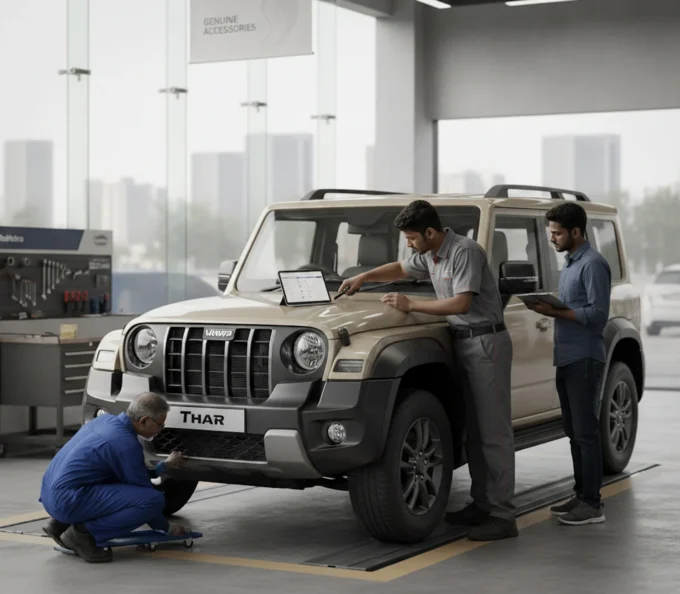
Best place? The stockyard. This is where you’ll see the car “raw,” without ribbons and perfumes. Ask your sales advisor for a yard visit. Most brands allow it if you push politely.
I have already written a perfect guide on how when to do pdi of your car?
If they refuse yard access, do it at the showroom before invoicing and before registration. Make it clear: “I’ll pay after I do my PDI.” Works like a charm.
Ideal time? Daylight. Natural light shows paint defects. Take a friend. Two brains, four eyes. Carry your phone torch, microfiber cloth, pen, and this checklist.
Weather matters. Avoid PDI in rain or under yellow showroom lights.
Shadows hide panel mismatches. Bright, neutral light = honest paint.
The Ultimate New Car PDI Checklist: Exterior & Underbody
Body Panels, Paint, Glass
Walk around slowly. Check reflections on each panel. Any wave, orange peel mismatch, or shade difference? Could be repaint. Look at bumper-to-fender color too — slight variation is common, but drastic change isn’t.
Inspect panel gaps: bonnet, doors, tailgate. They should be uniform. A big gap on one side means misalignment or past repair. Don’t ignore crooked badges or uneven beading.
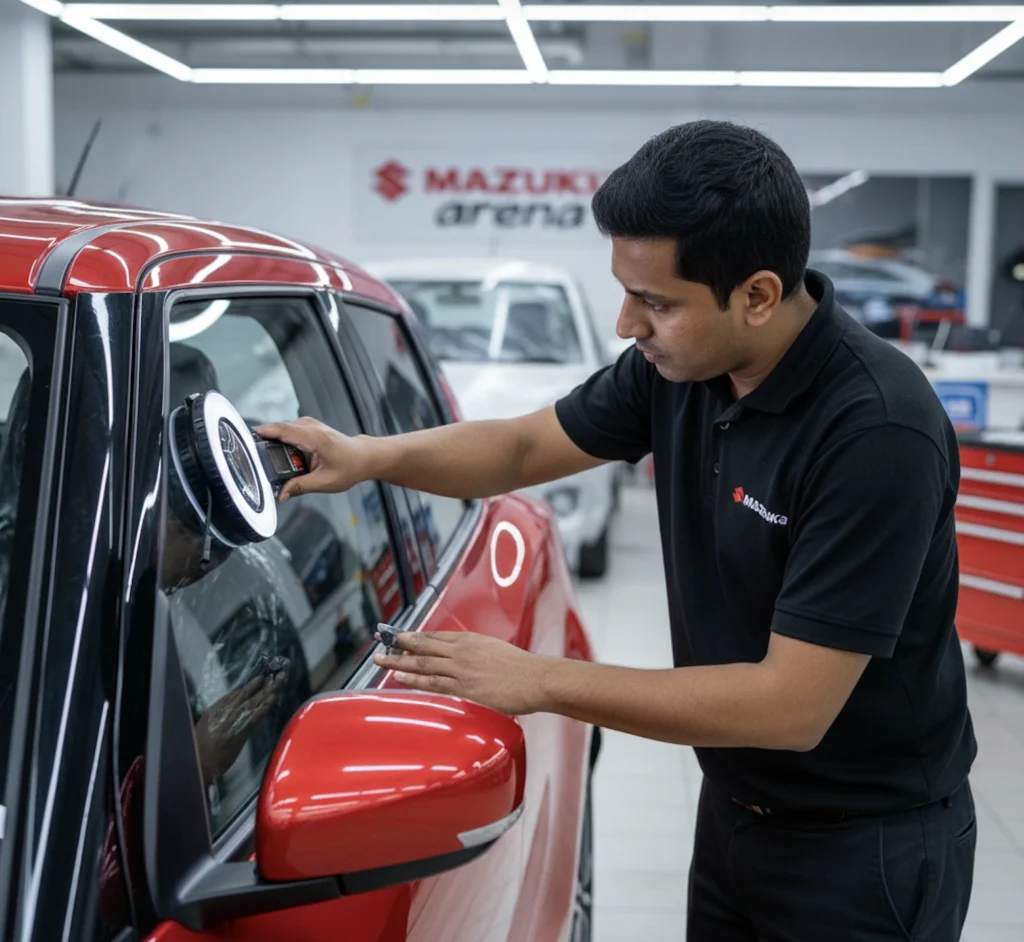
Glass check: windshield and windows must have the same brand and year markings. Look for scratches, chips, or “milkiness” at the edges. Wiper blades should be new and streak-free.
Open and close all doors. They should shut with a clean thud. No rattles, no squeaks. Rubber seals should be fresh, not torn or glued.
Tyres, Wheels, Brakes
Tyre DOT code tells the week and year of manufacturing. Example: 3524 = week 35, 2024. All four should be same brand, similar week. Massive mismatch? Ask why.
Check for cuts, bruises, or uneven wear. New car tyres should look… well, new. Spare wheel too. Don’t accept a steel spare if your variant is supposed to have an alloy.
Wheels: no kerb rash, no paint touch-ups. Inspect wheel caps/center caps. Lug nuts should be clean and even. Brake discs shouldn’t have deep scoring or patches of rust beyond light surface flash.
Press the brake pedal (engine off). It should feel firm, not spongy. Handbrake should hold the car on a slight slope.
Underbody, Leaks, Engine Bay
Peek under the car. No oil drips, coolant patches, or hanging plastics. Underbody covers should be properly screwed in. No fresh paint spray or oily wipe marks.
Open engine bay. Fluids should be at correct levels: coolant, brake fluid, washer fluid. Engine oil in many new cars is pre-filled, check dipstick if accessible (some are sealed). No wetness around caps.
Battery: note the manufacture date sticker. A very old battery on a brand-new car is a red flag. Terminals should be tight and clean.
Belts, hoses, and clamps should look fresh. No loose wires. No rodent bite marks (happens in yards!).
Interiors, Electronics & Safety Systems: Don’t Miss These
Cabin & Trim
Take a deep breath. New-car smell should be clean, not chemical-overpowering. Seats should be spotless — no stains, no loose threads, no sag.
Check seat adjustment, lumbar, height, recline, and folding. Rear seats should lock with a click. ISOFIX covers intact if provided.
Open every storage: glovebox, armrest, door pockets. Nothing should rattle. Parcel tray aligned. Boot mat fitted properly.
Toolkit present: jack, spanner, tow hook, triangle, spare bulb/fuse if brand provides. Owner’s manual, service booklet, and both keys — very important.
Infotainment & Connectivity
Fire up the head unit. Test radio, Bluetooth, Android Auto/Apple CarPlay. Plug your phone with a cable you use daily. Check mic clarity and speaker balance.
Reverse camera should be clear even in low light. Dynamic guidelines should move with steering if promised. Parking sensors, all beeps should work.
Navigation loads? OTA updates available? If the car has a connected app (Hyundai Bluelink, Kia UVO, Suzuki Connect, Tata iRA), ask them to demo pairing post-registration.
USB ports, 12V socket, wireless charger, test with your own devices. No excuses.
AC, HVAC & Controls
AC should chill fast. In Indian heat, you’ll know within 2-3 minutes. Try all blower speeds, modes, and rear vents. No hissing or foul smell.
Heater works too? Quick check. Climate control should change temperature gradually. No clicking from behind the dashboard.
Power windows one-touch up/down as claimed. ORVMs fold and adjust. Central locking and request sensors function on all doors.
Wipers, washers, horn, hazard lights, headlamp leveling — tick them off. Don’t be shy. You’re not “wasting time,” you’re saving future runs to the service center.
Safety & Instrument Cluster
Ignition on. All warning lights should glow and then go off: ABS, Airbag, Check Engine, TPMS, ESP. Anything staying on? Flag it immediately.
Seatbelts retract smoothly and lock under sudden pull. Height adjustment works. Airbag covers clean, not misaligned.
TPMS reads all tyres. If spare has a sensor (in some cars), check that too. If no TPMS, ask for proper inflation to recommended PSI.
Odometer reading: ideally under 50 km for most brands. Up to ~100 km can happen due to movement/testing, but demand a clear explanation if it’s higher.
My rule: anything above 100 needs a story and proof.
Start, Idle & Short Drive: If Dealer Allows
Some dealers allow a short yard loop. If you get the chance, grab it. Start the car cold. Idle should be steady; no vibration party on the steering or seats.
Listen for clicks, knocks, or belt squeals. In automatics, shift through P-R-N-D smoothly with foot on brake. No jerks. In manuals, clutch bite should be predictable.
Light steer, slight brake, and gentle acceleration. No pulling to one side. No dashboard warnings popping up under load.
If they don’t allow a drive, at least start, idle, and move a few feet in the yard. Engage reverse camera and sensors once.
Documents & Numbers to Verify Before Payment
This is where most people get lazy. Don’t. Numbers and papers are your safety net. Match VIN, engine number, and variant details everywhere.
VIN is on the windshield corner, B-pillar, or engine bay firewall. Decode the month/year (every brand’s format differs). Make sure it’s not an old stock car being pushed at “new” price.
Ask for stockyard gate pass or internal PDI report if they have one. Not mandatory, but helpful. Note battery and tyre manufacturing dates too.
- Form 21 (Sale Certificate)
- Form 22 (Road Worthiness & emission compliance)
- Tax Invoice with correct ex-showroom/on-road breakup
- Insurance policy draft (check IDV, zero-dep add-ons, engine/gearbox cover)
- Temporary registration (if needed) and receipt of road tax/fastag
- Warranty booklet, service schedule, free service coupons
- Owner’s manual, both keys, key code tag
- Accessories invoice (separate and itemized)
Pro-tip:
Get everything on email/WhatsApp. Written proof beats “Sir, I told you.”
Money & Delivery Day Hacks: Don’t Get Scammed
Never pay full amount before PDI. Keep a small balance to be paid post-PDI and pre-registration. That’s your leverage if you spot issues.
Insurance: compare dealer quote with outside quotes. Many times, you’ll save 10–30%. If the dealer insists on their tie-up, push back politely.
Extended warranty and RSA? Take it from the brand, not third-party. You can even buy within a few months of delivery for most brands. Don’t rush unless there’s a genuine limited-time price benefit.
Accessories trap: floor mats for 8k? Lol, no thanks. Only pay for what you really want. Get a separate accessories invoice and check fitment quality yourself.
Delivery day encore: do a quick PDI again after washing and number plate fitment. Sometimes washing reveals swirl marks or minor scratches. Note and get it recorded.
The No-Stress PDI Mini-Checklist (Save/Share)
- Exterior: paint shade match, panel gaps, glass condition, wipers
- Tyres: DOT week/year match, spare wheel type, correct PSI
- Underbody/engine bay: leaks, loose parts, fluid levels, battery date
- Interior: seats, seatbelts, trims, tool kit, spare key, manual
- Electricals: all lights, horn, power windows, mirrors, central lock
- Infotainment: BT/AA/CarPlay, speakers, camera, sensors, USB/12V
- AC/HVAC: fast cooling, modes, rear vents
- Safety: warning lights self-check, TPMS, ABS/Airbag lights off
- Odometer: ideally < 50 km, ask if > 100 km
- Numbers: VIN/engine match across car and invoice
- Docs: Form 21/22, invoice, insurance draft, warranty, service book
Time Saving Tips
You can use our free online tool for pdi checklist download.
FAQ: People Also Ask
Who Should Do Hardcore PDI? (And Who Can Chill)
If you’re buying your first car, stretching your budget, or planning to keep it for 7–10 years, hardcore PDI is non-negotiable. This is your once-in-a-decade purchase. Protect it.
If you’re picking a hot seller during peak demand, do an even tighter PDI. High rotation sometimes means rushed prep and yard mishandling. Be the calm inspector, not the excited victim.
If you’re super busy, take a car-nerd friend or hire a third-party PDI service. Worth every rupee for the peace of mind. Trust me, it beats future workshop drama.
Bottom line: a clean PDI means your car starts life perfect, tight, rattle-free, and ready for memories. Do it once, do it right, and then go celebrate with a long drive and a cutting chai. You’ve earned it.
Dealer-Day Script You Can Copy-Paste
“Hi, I’ll be doing my PDI before registration and final payment. Please arrange the car in daylight with VIN visible, both keys, and tool kit. I’ll verify documents (Form 21/22, invoice, insurance draft) and do a functional check of lights, AC, infotainment, TPMS, and odometer. If all good, we proceed to registration. Thanks!”Simple. Polite. Powerful. Now go get your perfect car, boss.




Leave a comment